
RFID - Radio Frequency Identification


Elo Edge Connect - RFID reader - USB 2.0 - 125 KHz / 13.56 MHz / 2.4 GHz - Black - for Elo 1002L, 1302L, 1502L, 1902L, 1903LM, 2002L, 2202L, 2203LM, 2402L, 2403LM, 2702L, 2703LM, 3203L, 4303L, 5053L, 5502L, 5503L, 5553L, 6553L; Desktop touch monitors 1002L; Interactive digital signage displays 3202L, 4202L, 4602L, 6553L; I-Series 2.0; I-Series 3.0; I-Series 4.0
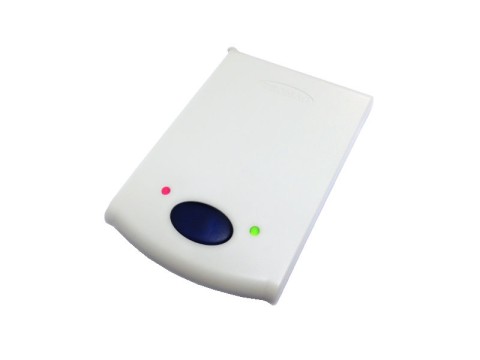
RFID reader, 125 kHz (EM4102), slot, USB (RS232 emulation), dimensions (WxHxD): 65x23x100mm
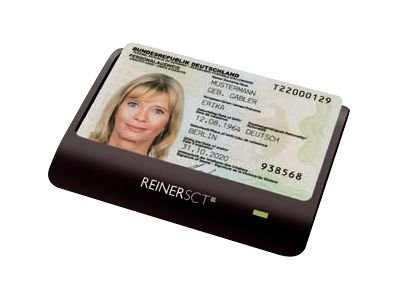
ReinerSCT cyberJack RFID basis - RFID reader - USB
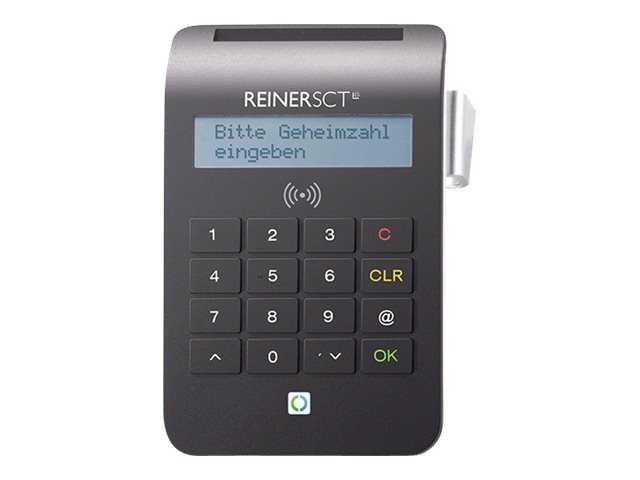
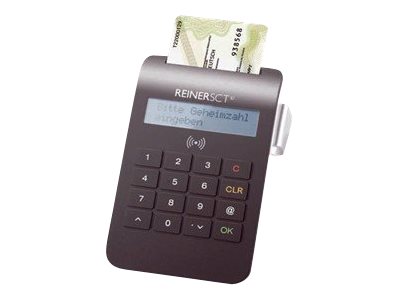
The cyberJack RFID komfort combines excellent design with extensive functionality. It supports almost all applications of contact chip cards, such as online banking via HBCI/FinTS, Secoder, and EBICS, as well as GeldKarte and qualified electronic signatures.The cyberJack RFID komfort also supports contactless RFID chip cards with all functions and maximum security, such as the new ID card (nPA) in conjunction with the citizen client. The large, illuminated LC displayshows the authorized user and authorizations, giving you full control over the release of your personal data. With secure PIN entry via your own keyboard, the confidentiality of your PIN is guaranteed at all times. Modular firmware managementallows the cyberJack RFID komfort to be used in a wide range of applications, so that purchasing a single reader gives you investment security for many years of multifunctional use.ReinerSCT cyberJack RFID komfort - RFID reader - USB
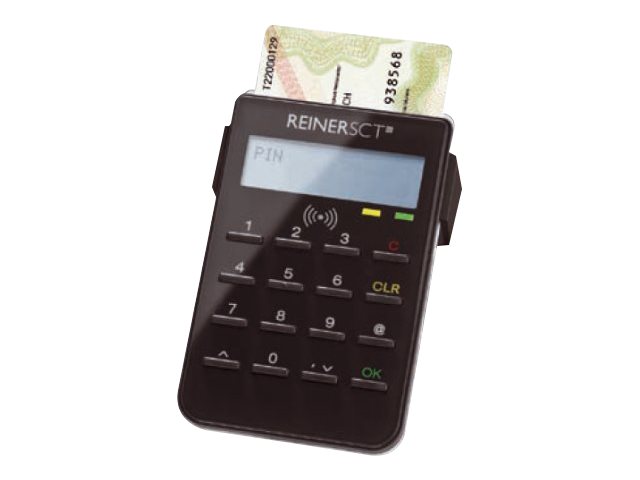
The cyberJack RFID standard supports contactless RFID chip cards for applications such as eID with the nPA, GeldKarte, or eTicketing. With contact chip cards, it supports online banking via HBCI/FinTS, Secoder, and EBICS, as well as GeldKarte and qualified electronic signatures.The cyberJack RFID standard meets the strict requirements of the current ZKA standards and is a security class 3 card reader for online banking.The cyberJack RFID standard fully supports the nPA's PACE protocol and, when using the eID function, clearly displays the authorizations and the authorized person on the display before data access.The cyberJack RFID standard has a secure, certified PIN entry for the eID function of the nPA via the PACE protocol as well as for all other contact chip cards.ReinerSCT cyberJack RFID standard - RFID reader - USB
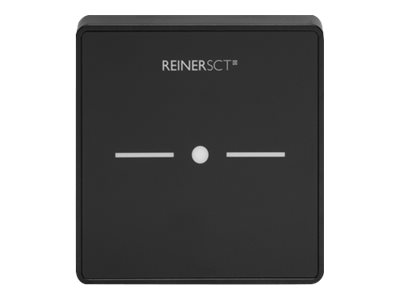
The external RFID reader V3 for timeCard access control is an RFID wall reader for timeCard ID cards or timeCard transponders. It can be installed indoors or in protected outdoor areas using surface mounting.Its two-part housing design makes it quick and easy to install. Thanks to the integrated snap-in terminal strip in the rear case, connection is also very convenient. During installation, the front case with the electronics is simply snapped onto the pre-wired rear case and secured with two stainless steel screws. A molded special seal seals the front and rear cases.Thanks to the innovative circuit design, the transponder or RFID card is recognized and read very early and reliably.The respective security status is signaled visually by a four-color backlight and acoustically by a buzzer.ReinerSCT timeCard V3 - RFID reader - RS-422 - 13.56 MHz - Anthracite
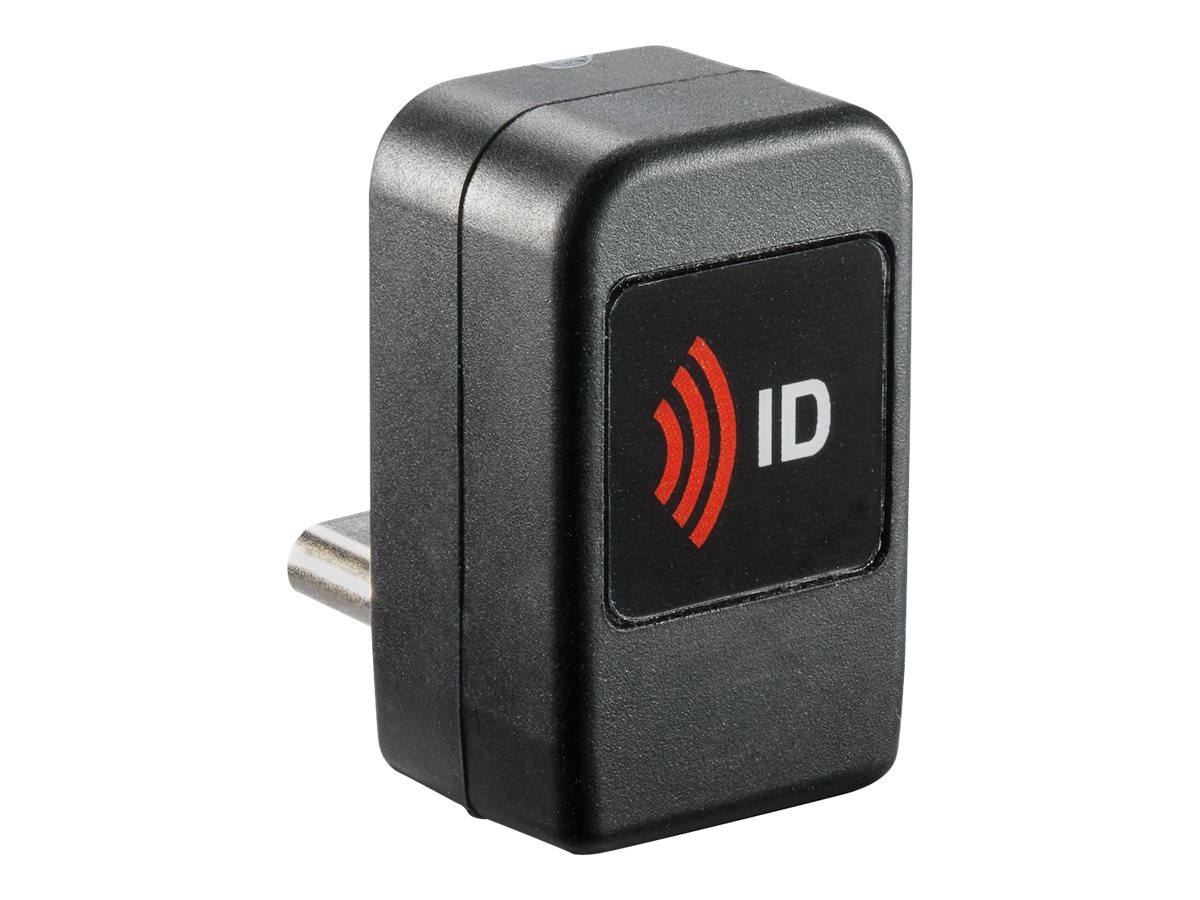
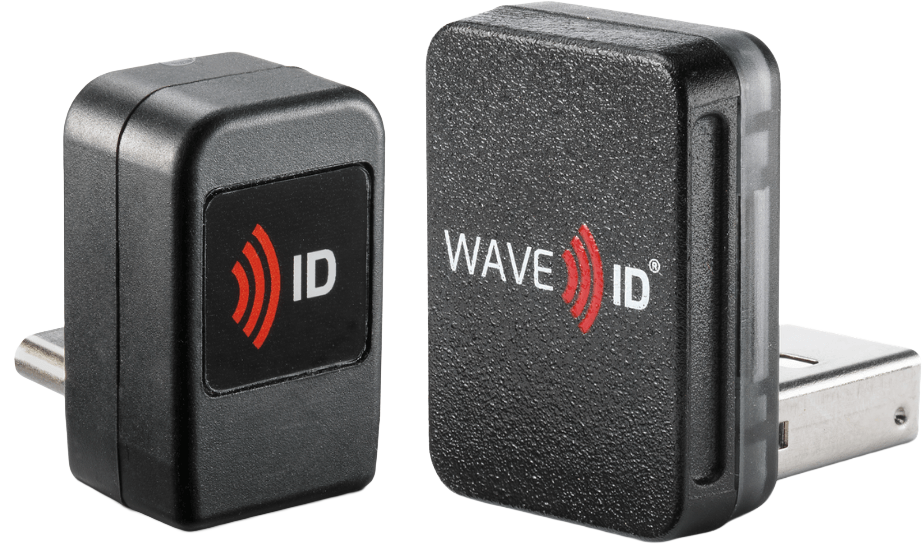
rf IDEAS WAVE ID Nano - RF proximity reader - USB-C - 13.56 MHz - Black
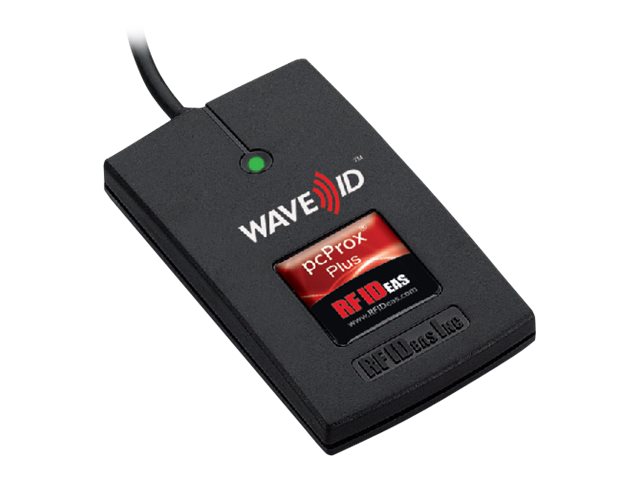
rf IDEAS WAVE ID Plus Keystroke RA FactoryTalk V2 Black Surface Mount Reader - HF proximity reader - USB - 125 KHz / 13.56 MHz - Black

rf IDEAS WAVE ID Plus Keystroke V2 - RF proximity reader - USB - 125 KHz / 13.56 MHz - Black
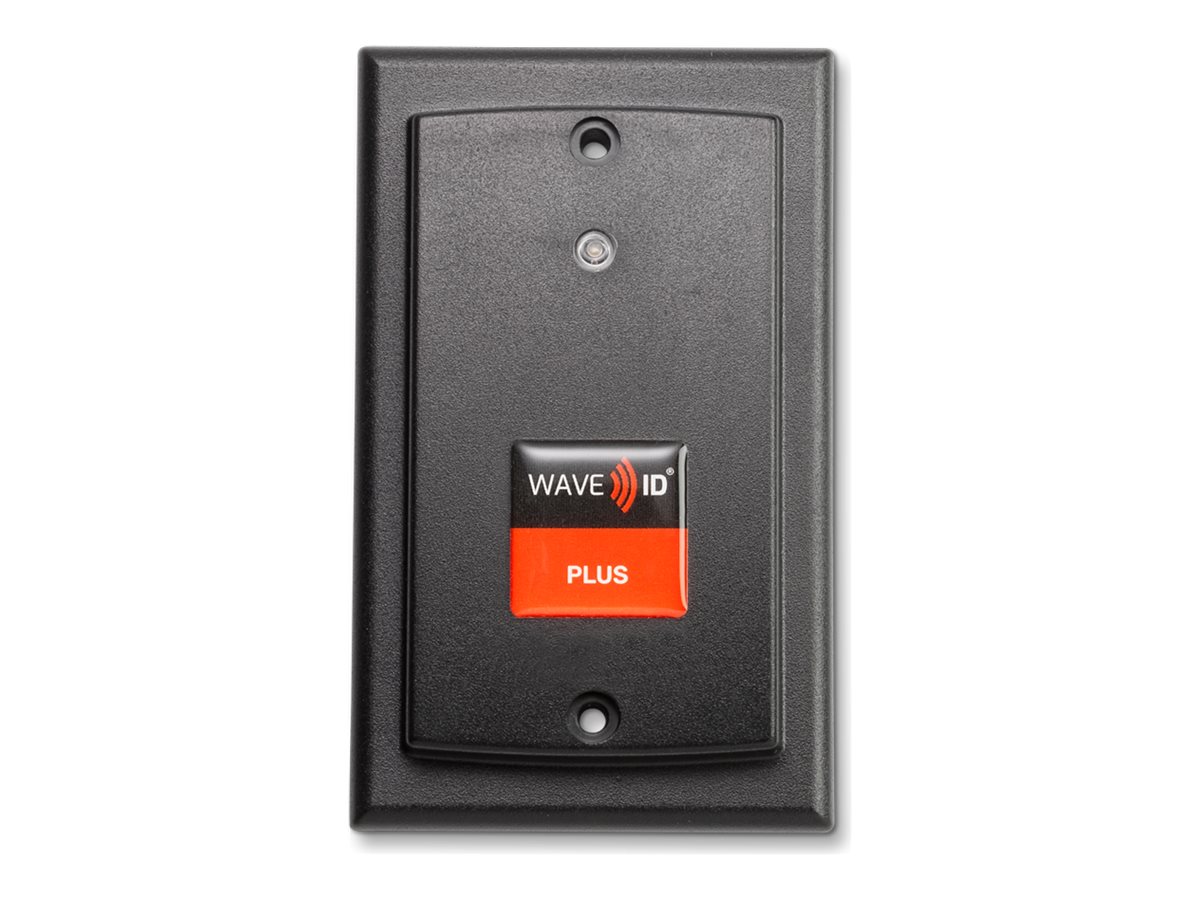
rf IDEAS WAVE ID Plus Keystroke V2 - RF proximity reader / SmartCard reader - RS-232 - 125 KHz / 13.56 MHz - Black
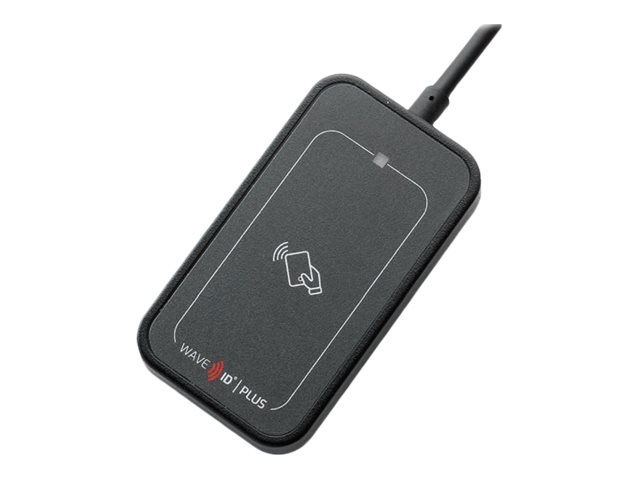
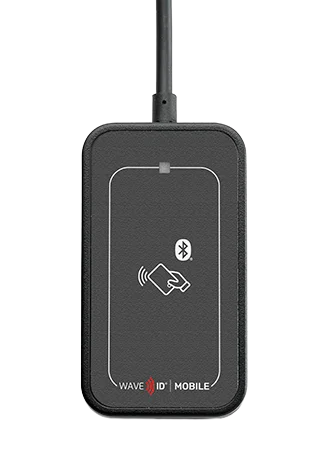
The rf IDEAS WAVE ID Plus Mini is designed to enhance your access control with reliable RF proximity readers and contactless SMART card capabilities. This USB-powered device integrates seamlessly with various systems while meeting multiple standards, including UL, FCC, and RoHS. With a maximum operating temperature of 65°C, it is designed for various environmental conditions and ensures consistent performance and durability.rf IDEAS WAVE ID Plus Mini - RF proximity reader / SmartCard reader - USB - 125 KHz / 132 KHz / 13.56 MHz - Gray, Black
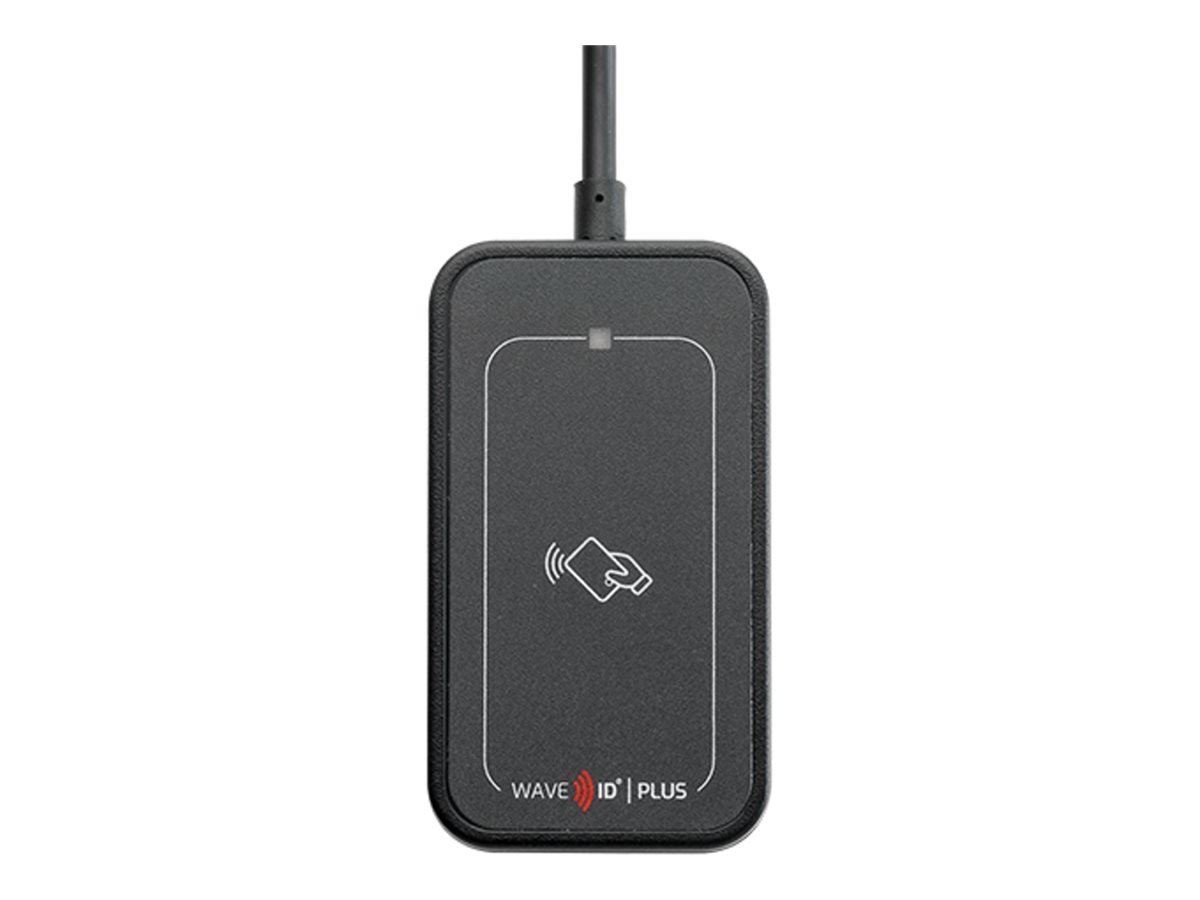
The rf IDEAS WAVE ID Plus Mini is designed to enhance your access control with reliable RF proximity readers and contactless SMART card capabilities. This USB-powered device integrates seamlessly with various systems while meeting multiple standards, including UL, FCC, and RoHS. With a maximum operating temperature of 65°C, it is designed for various environmental conditions and ensures consistent performance and durability.rf IDEAS WAVE ID Plus Mini - RF proximity reader / SmartCard reader - RS-232 - 125 KHz / 132 KHz / 13.56 MHz - Black
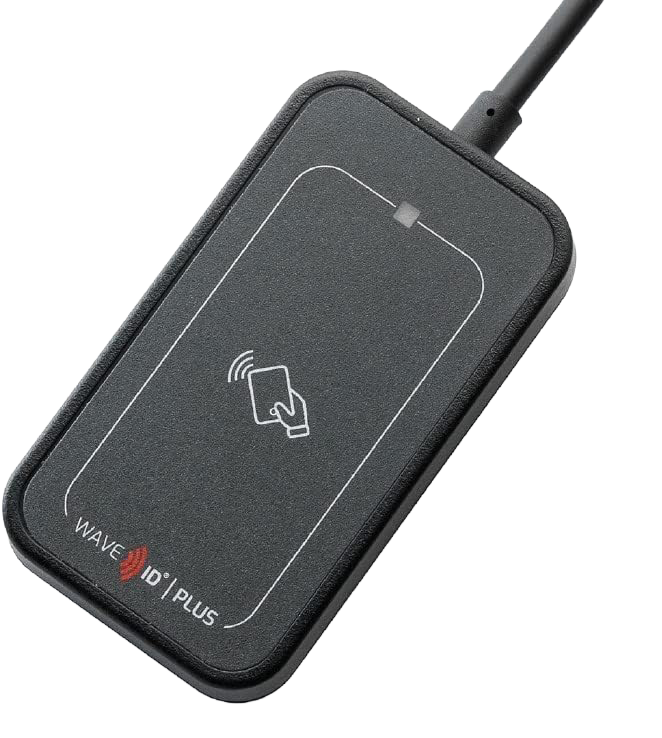
The rf IDEAS WAVE ID Plus Mini is designed to enhance your access control with reliable RF proximity readers and contactless SMART card capabilities. This USB-powered device integrates seamlessly with various systems while meeting multiple standards, including UL, FCC, and RoHS. With a maximum operating temperature of 65°C, it is designed for various environmental conditions and ensures consistent performance and durability.rf IDEAS WAVE ID Plus Mini - RF proximity reader / SmartCard reader - USB - 125 KHz / 132 KHz / 13.56 MHz - Black
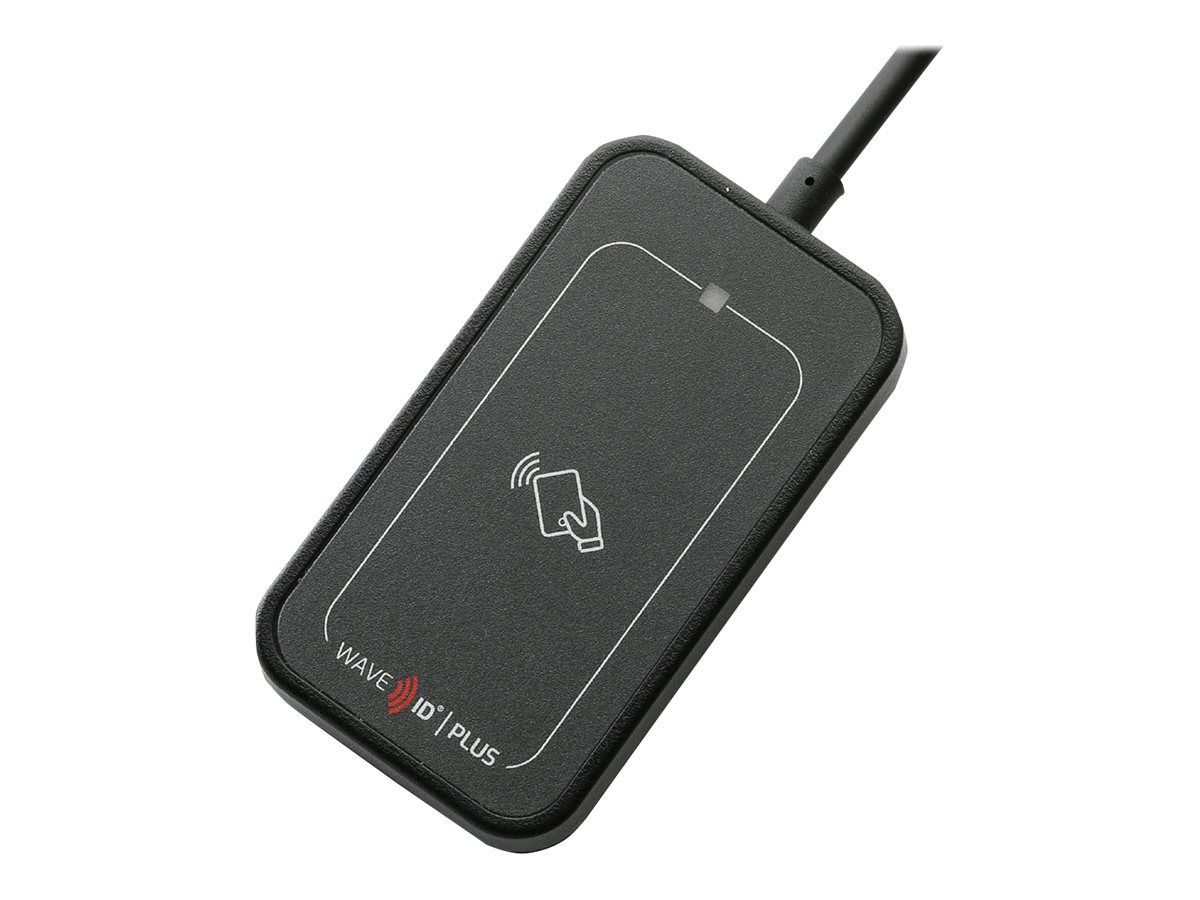
The rf IDEAS WAVE ID Plus Mini V3 Keystroke is a versatile input device that supports RF proximity and SMART card reading functions, making it suitable for a variety of applications. With its integrated 1.83 m USB cable, it offers flexibility in deployment. The device operates in a temperature range of -25°C to 65°C and is designed for relative humidity of 5% to 95%, ensuring reliable performance in a variety of environments. Compatibility with iClass SEOS cards and iCLASS SE cards provides flexible options for user authentication, enhancing security and usability. A beep tone and LED indicator for notifications allow users to monitor the status of the device during operation. The rf IDEAS WAVE ID Plus Mini V3 also features adjustable beep settings, auto-tuning capabilities, and rubber feet for stability during use. This plug-and-play compatible external reader is a user-friendly solution for seamless integration into existing systems, making it the top choice for secure identity verification processes. rf IDEAS WAVE ID Plus Mini V3 Keystroke - HF proximity reader / SmartCard reader - USB - 125 KHz / 132 KHz / 13.56 MHz - Black, gray inlay
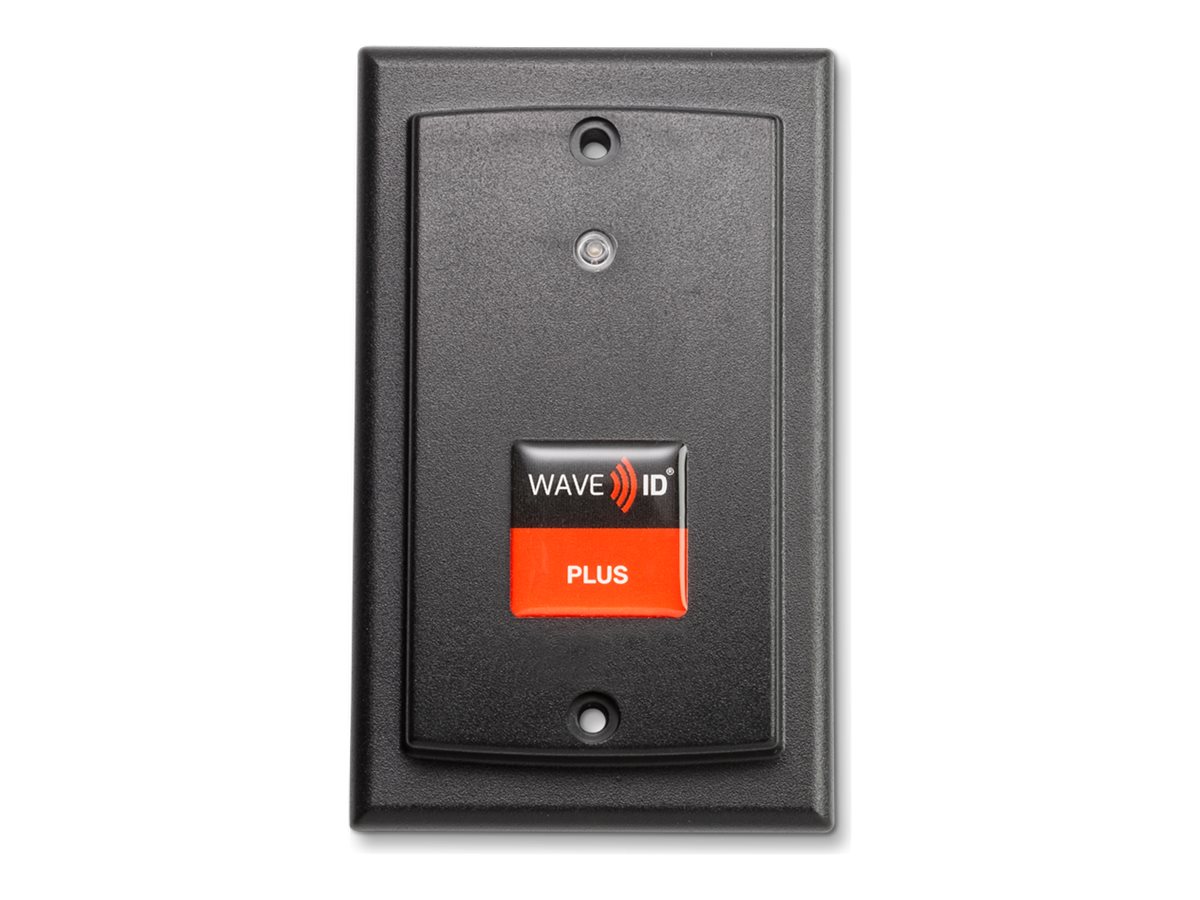
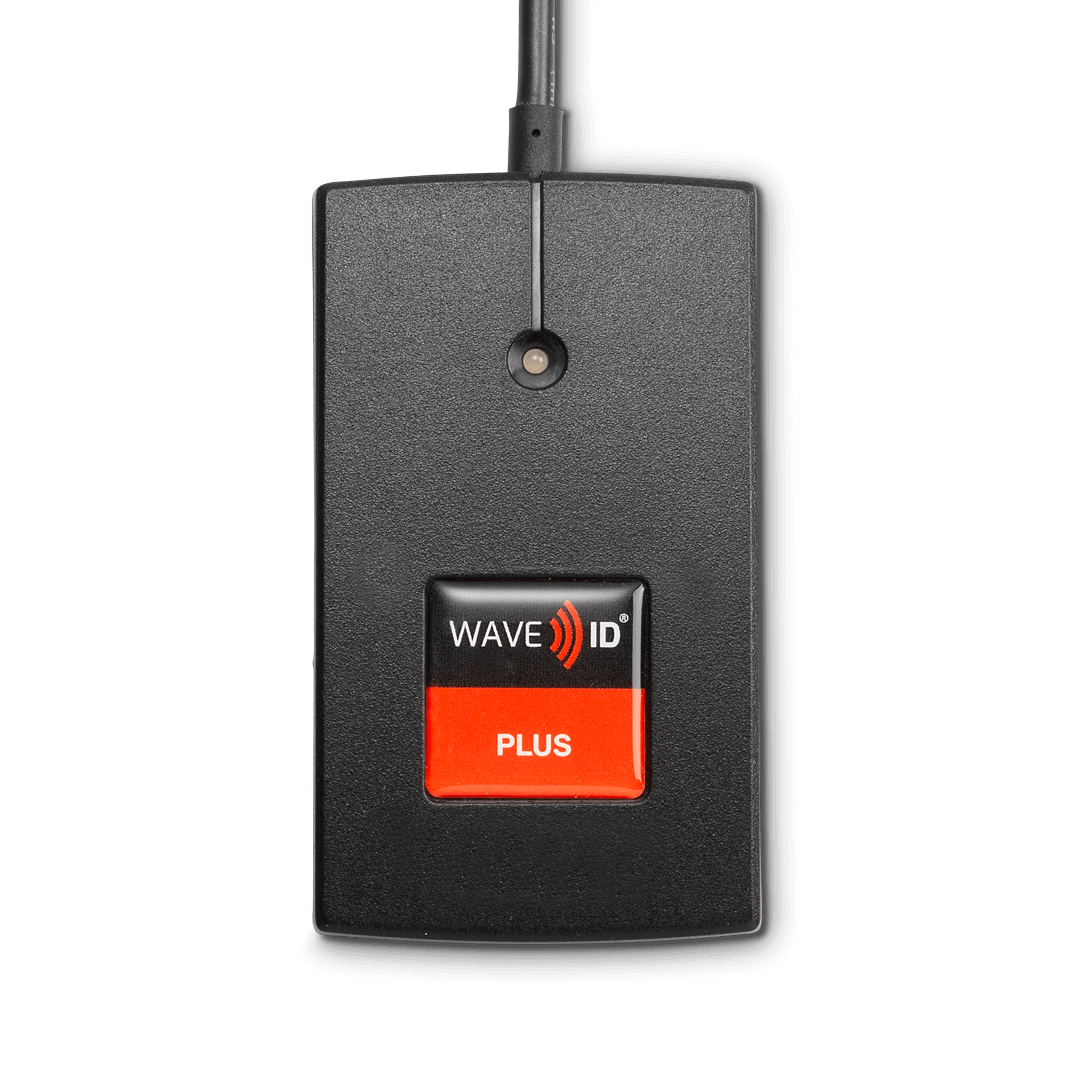
rf IDEAS WAVE ID Plus SDK V2 - RF proximity reader / SmartCard reader - USB - 125 KHz / 13.56 MHz - Black
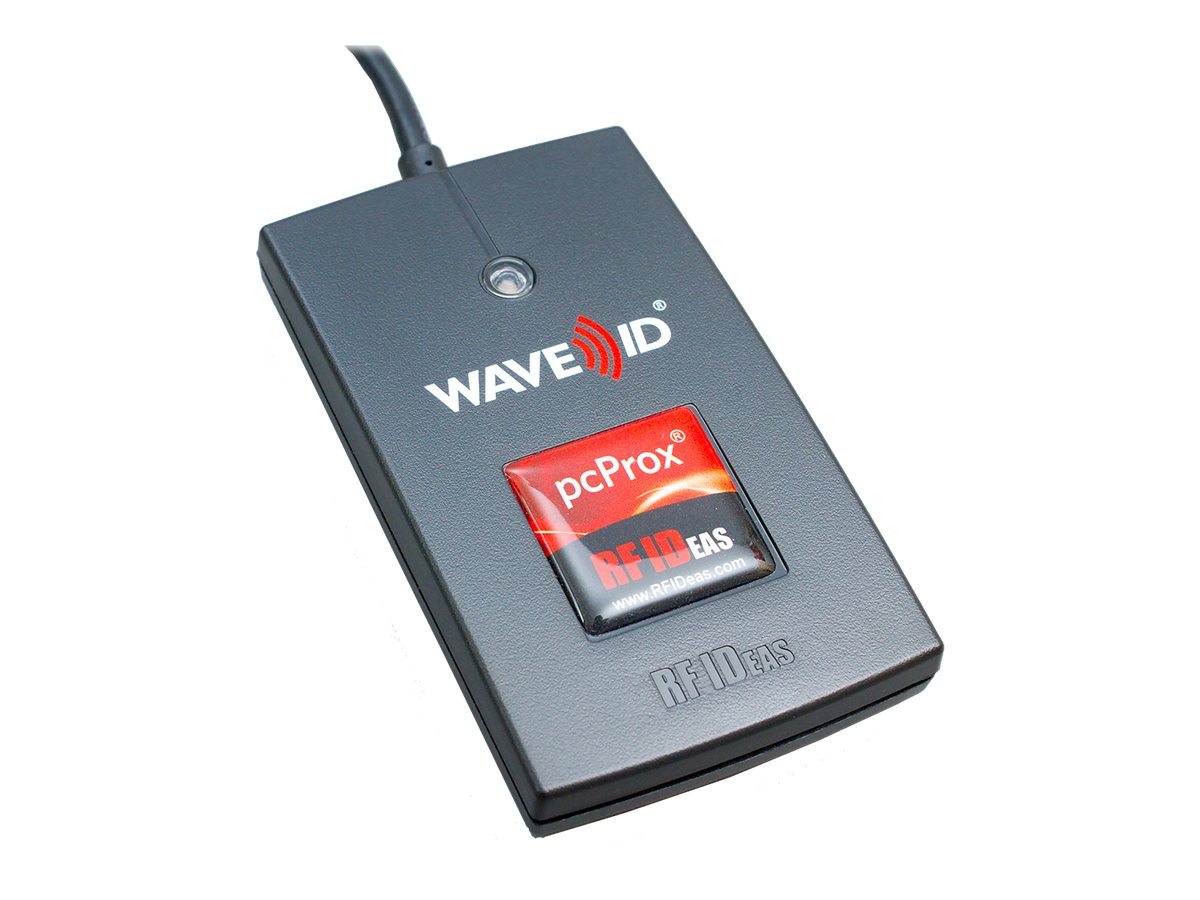
rf IDEAS WAVE ID Solo Keystroke CSN Black Reader - RFID reader - USB - Black

Zebra AN510 RFID Antenna - Antenna - 8.5 dBi - external, flush mount, internal, VESA mount - TAA compliant

Zebra AN620 RFID Antenna - Antenna - 4 dBi - Wall mountable, indoor - for Zebra FX7400, FX7500, FX9500

Zebra - Antenna Mount - for Zebra AN440 RFID Antenna, AN480 Single Port RFID Antenna

Zebra Confidex Silverline Blade II M730 ETSI - Polyethylene terephthalate (PET) - Adhesive tape with high adhesive strength - EPC Class 1 Gen 2, ISO/IEC 18000-6C, 865-869 MHz, 128-bit - white - 60 x 25 mm 400 pcs. (1 roll(s) x 400) RFID labels - for ZT400 Series ZT410, ZT411, ZT420, ZT421

Discover the Zebra Confidex Silverline Blade II+ M780 Global, a printer consumables solution designed for durability and performance. Manufactured by Zebra Technologies, these RFID labels are designed to meet the demands of various applications, providing a robust media solution that can withstand chemicals, water, and harsh washing processes. With their strong adhesive, these labels ensure secure placement on a variety of surfaces, making them ideal for tracking and management tasks in demanding environments.Each roll contains 400 labels measuring 60 x 25 mm, optimized for thermal transfer printing. This ensures crisp, clear, and durable prints that will not fade or smudge over time. These labels meet IP68, RoHS, and UKCA standards and are equipped with EPC Class 1 Generation 2 and ISO/IEC 18000-6C RFID technology. Whether in industry, retail, or logistics, Zebra Confidex Silverline Blade II+ M780 Global labels are your choice for reliable, high-quality print media. Zebra Confidex Silverline Blade II+ M780 Global - Polyethylene terephthalate (PET) - High-adhesion adhesive tape - EPC Class 1 Gen 2, ISO/IEC 18000-6C, 865-928 MHz, 128-bit - White - 60 x 25 mm 400 pcs. (1 roll(s) x 400 RFID labels - for Zebra ZT410, ZT411

Zebra consumables are manufactured to the highest standards. They undergo rigorous testing to ensure they deliver the best print quality and outstanding performance. Zebra Confidex Silverline Classic II M730 - Polyethylene terephthalate (PET) - Acrylic adhesive - 1300 micron - Silverline Classic II, EPC Class 1 Gen 2, ISO/IEC 18000-6C, 902-928 MHz, 128-bit - white - 100 x 40 mm 250 label(s) (1 roll(s) x 250) RFID labels

Zebra Confidex Silverline Micro II MR6-P ETSI - Polyethylene terephthalate (PET) - Acrylic adhesive - EPC Class 1 Gen 2, ISO/IEC 18000-6C, 865-869 MHz, 128-bit - White - 45 x 13 mm 600 pcs. (1 roll(s) x 600) RFID labels - for ZT400 Series ZT410, ZT411, ZT420, ZT421

Plastic card made of PVC, 30 mil, MIFARE 1K classic, 500 cards, white
What is RFID and how does it work?
The abbreviation "RFID" stands for Radio Frequency Identification. It is a radio identification system that uses electromagnetic waves for automatic identification. RFID systems are used for the automatic and contactless identification and localisation of objects using radio waves.- The RFID transponder contains a microchip with stored information for unique labelling. A distinction can be made between active and passive RFID transponders, which differ in many parameters such as power supply, range and service life.
- An antenna contained in the transponder functions as a coupling element with the reader and transmits radio signals between the two. The size of the antenna depends on the required frequency. The information on the microchip can be read using RFID readers and scanners.
- The reader generates an electromagnetic signal that achieves different ranges depending on the intended use. RFID readers can be installed as stationary or mobile devices. They contain software that is connected to the database, the so-called middleware.
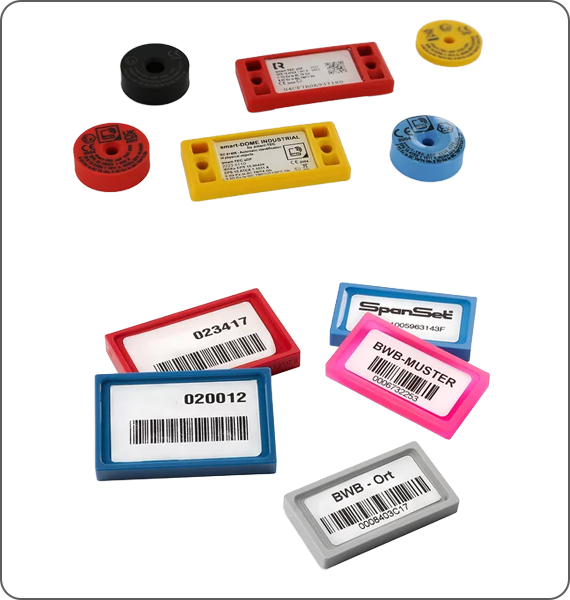
Which kinds of RFID transponders are available?
RFID transponders are available in various shapes and sizes, so that they can be attached to objects as RFID stickers and labels or implanted as RFID chips. The transponders are also available as RFID tags or KeyFobs.
A distinction is made between active, semi-passive and passive RFID transponders.
Passive RFID tags consist of an integrated circuit and an antenna and, unlike semi-passive and active transponders, do not have their own power supply. They are characterised by their long and stable service life, but have a relatively small data memory.
While passive transponders obtain their energy from the RFID reader via inductive coupling, active transponders consist of active transponders consist of an integrated circuit, an antenna, a battery and an integrated transmitter. This means that active RFID tags can send their own energy to the reader, while passive transponders merely reflect the energy of the RFID reader. This means that significantly greater distances can be achieved for the transmission of the stored information. The extended reading range is complemented by numerous additional functions such as integrated sensors and a larger data memory. However, active RFID tags usually take up more space and cost more due to the extensive components usually take up more space and cost more higher costs.
Compared to active transponders, semi-passive transponders do not have their own transmitter, but do contain a battery and can be equipped with RFID sensors, real-time tracking and acoustic notifications be equipped.
What frequencies do RFID systems use and what range do they achieve?
RFID systems operate in the low frequency (LF), high frequency (HF), ultra-high frequency (UHF) and super-high frequency (SHF) frequency ranges.
- Low Frequency achieves a range of a few centimetres with long waves in the frequency range of 125 to 148 KHz and is used in particular for access control or animal identification.
- High frequency uses short waves with 6.78 MHz, 13.56 MHz or 27.125 MHz, whereby 13.56 MHz has established itself as the global standard. Distances of up to 3 metres can be achieved - ideal for use in libraries, the textile industry and smart cards.
- Ultra-high frequency operates at 868 MHz (European standard) or 915 MHz (US standard) and achieves a long range of up to 10 metres. If active transponders are used, the maximum range of UHF RFID systems increases to up to 100 metres. This frequency range is mainly used as UHF RFID tags on boxes, pallets and containers in supply chain management.
- Super-high frequencies are microwaves with high frequencies of 2.45 GHz and 5.8 GHz, which are used, for example, to operate toll systems for vehicle identification. The high frequencies achieve a range of up to 4 metres, with active transponders even up to 300 metres.
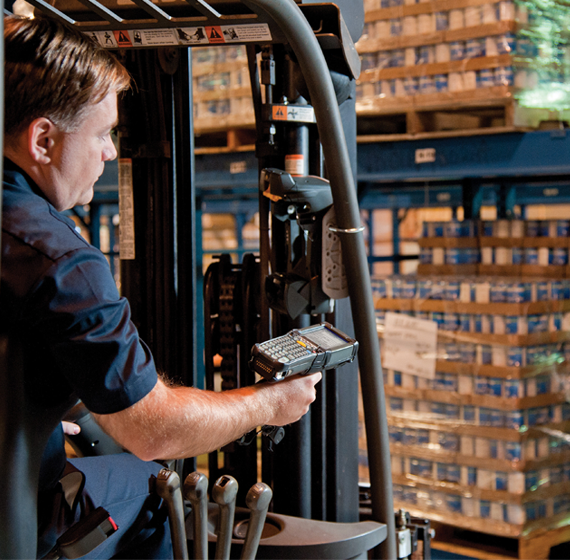
The advantages of RFID technology
- Contactless identification
- No visual contact between transmitter and receiver required
- High transmission rates and fast readability
- Simultaneous detection of many transponders
- High security thanks to copy protection and encryption of information
- High resistance to environmental influences
- RFID tags can be erased and rewritten
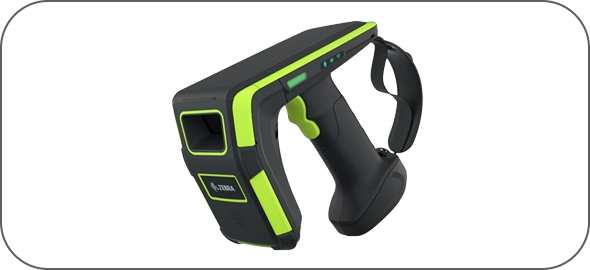
RFID Readers and Handhelds
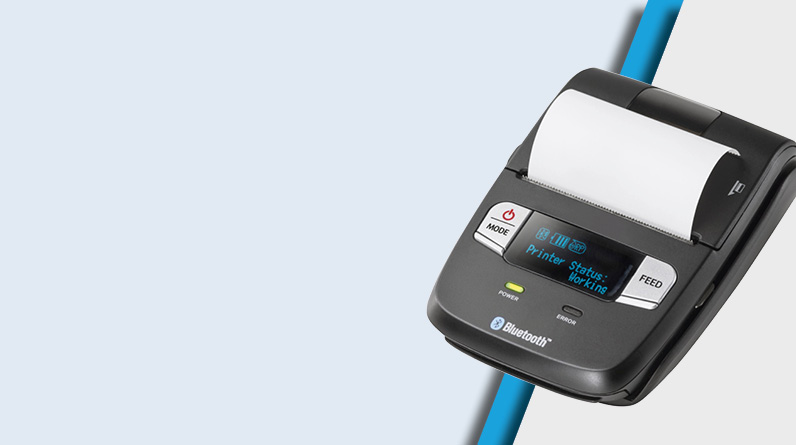
RFID Printers
In addition to readers and handhelds, there are also various printers that utilise RFID technology. They use a 3-in-1 system to create, print and encode labels. This means that printed labels can not only be designed visually, but can also be technically equipped with an integrated RFID transponder. As contact is no longer necessary for data exchange, not only are processes simplified, but several labels can also be read simultaneously. Labels created by RFID printers can be used in a variety of ways, for example to easily label and track items. It also enables easier management of food, laboratory products and patient records.
RFID technology in retailRFID labels
are becoming an increasingly popular alternative to barcode systems in retail, as they greatly simplify stocktaking and stock overview. The implementation of this technology minimises errors enormously while increasing speed and accuracy. In this context, accurate and up-to-date stock overviews of items are becoming increasingly popular in retail.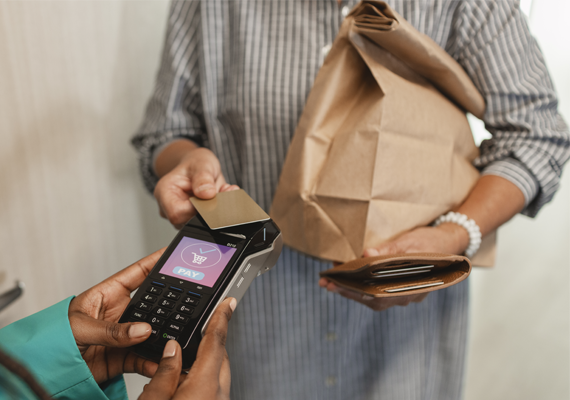
Areas of application for RFID technologyThe
characteristics of RFID technology can vary greatly depending on the type of transponder and reader. For this reason, there is no definitive list of application areas. The applications of RFID are always individual and are constantly being expanded. In principle, it can be used in any industry. It is most commonly used in the retail, logistics, industrial, production and healthcare sectors.Possible applications of RFID technology
- Access control
- Time recording
- Payment systems
- Identification and monitoring of people and animals
- Supply chain management
- Theft protection
RFID as a security factorThe
security of RFID systems plays a central role, especially as they are often used to transmit sensitive data such as access information or personal identification data. Modern RFID technologies offer numerous protective mechanisms to prevent manipulation, unauthorised reading (skimming) and copying of the stored data. These include encryption processes, authentication protocols and integrated copy protection on the RFID tags themselves. Blocking is also important, whereby special covers or card sleeves prevent unauthorised access by potential attackers. In addition, when implementing RFID solutions, companies ensure that they fulfil data protection regulations and ensure that the entire infrastructure is continuously secured through regular updates and security standards. This ensures that the contactless and fast transmission of information remains both secure and reliable.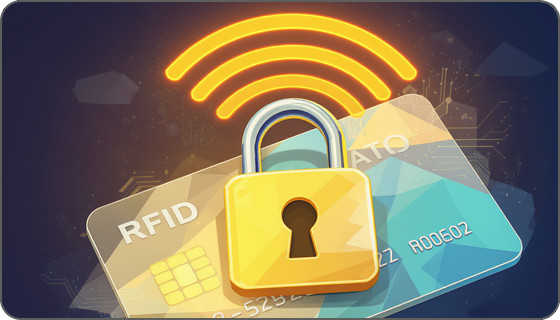
What is the difference between barcodes and RFID?
The technology between barcodes and RFID may seem similar at first glance, but there are some key differences, such as data storage, transmission and reuse. Unlike barcodes, RFID technology stores data directly on the tag, eliminating the need for external databases. Barcodes require visual contact with the reader, whereas RFID tags operate via radio waves. This means that the objects to be recorded are easier to place in warehouses and logistics with RFID technology. RFID can store more information than a barcode and achieves much greater ranges. RFID transponders can be implemented directly in the product, whereas barcodes have to be printed on or attached externally. In contrast to RFID, barcodes cannot be rewritten. RFID information can be read even if it is dirty, which is often not the case with dirty or damaged barcodes.